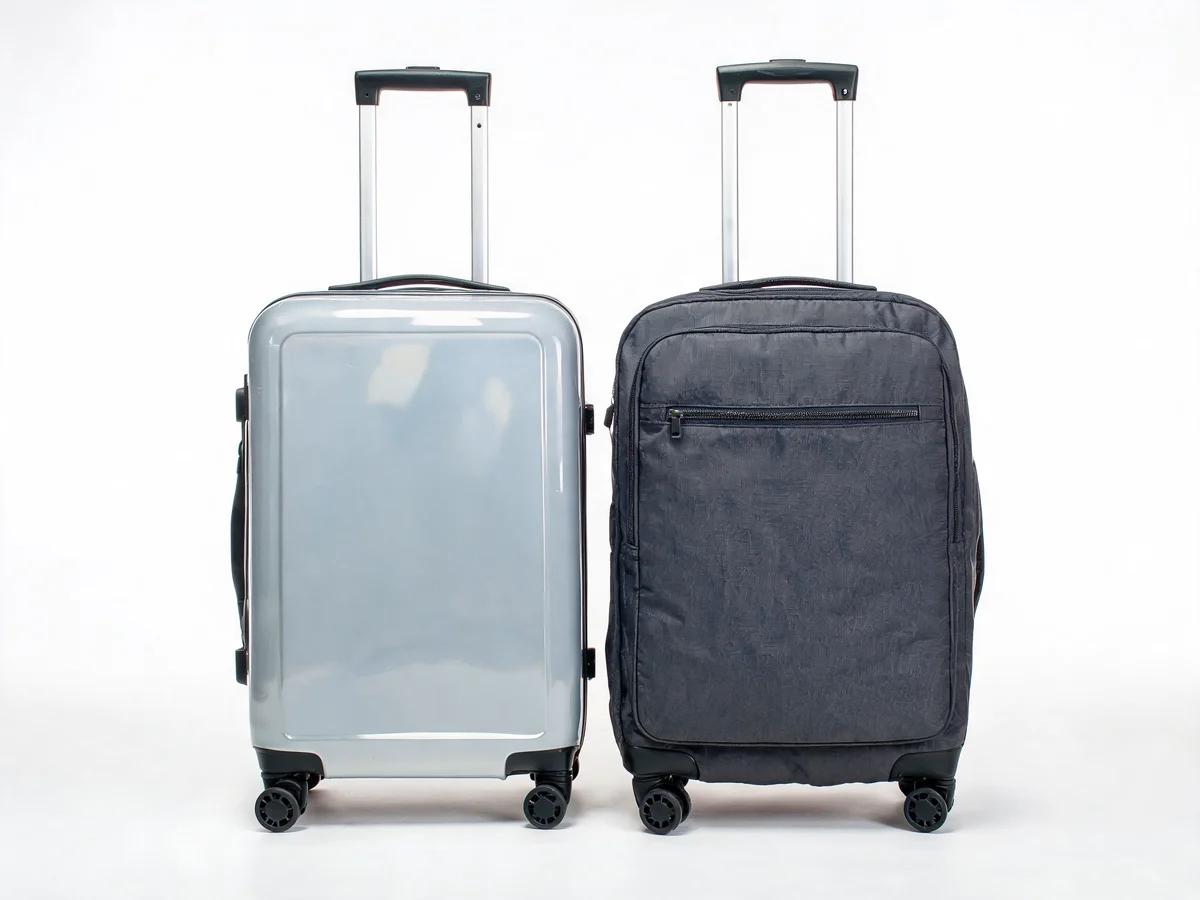
Choosing between a hard shell and soft shell carry-on is one of the most important decisions you'll make when shopping for luggage. It's not just about aesthetics—this choice affects everything from how much you can pack to how well your belongings are protected during travel. With airlines becoming increasingly strict about carry-on dimensions and travelers demanding more from their luggage, understanding the differences between these two styles has never been more critical.
Whether you're a frequent business traveler, an occasional vacationer, or somewhere in between, this comprehensive guide will help you navigate the hard shell versus soft shell debate. We'll explore the pros and cons of each type, examine real-world performance, and help you determine which option best suits your travel style and needs.
Understanding Hard Shell Luggage
Hard shell luggage, also known as hardside luggage, features a rigid exterior typically made from materials like polycarbonate, ABS plastic, aluminum, or polypropylene. These materials create a protective shell around your belongings, offering a completely different travel experience compared to their soft shell counterparts.
The Construction and Materials
Modern hard shell luggage has evolved significantly from the heavy, inflexible cases of decades past. Today's hardside bags use advanced engineering to balance protection with weight considerations. Polycarbonate, for instance, is incredibly impact-resistant while remaining relatively lightweight. The Arlo Skye The Frame Carry-On exemplifies this modern approach, weighing 8.1 lbs while providing excellent protection for your valuables.
Premium hard shell options often feature multiple layers of protective materials, creating a robust barrier against impacts, crushing, and water. The construction typically involves two molded halves joined by a zipper or frame closure system, creating a clamshell design that opens flat for easy packing.
Advantages of Hard Shell Carry-Ons
Superior Protection for Fragile Items
The primary advantage of hard shell luggage is its protective capability. If you travel with electronics, camera equipment, glass bottles, or other breakable items, a hard shell provides a rigid barrier that won't collapse under pressure. When overhead bins are stuffed to capacity or your bag gets jostled during handling, that hard exterior keeps your belongings safe.
Weather Resistance
Hard shell luggage offers superior water resistance compared to most soft shell options. While no luggage is completely waterproof at the zippers, hard shell cases prevent water from penetrating through the material itself. This becomes invaluable when you're caught in a downpour rushing to your gate or when your bag sits on a wet tarmac.
Easy to Clean
Spills, dirt, and stains wipe off effortlessly from hard shell surfaces. A simple damp cloth is usually all you need to restore your luggage to pristine condition. This makes hard shell options particularly appealing for longer trips where your bag might encounter various environments.
Structured Packing
The rigid frame maintains its shape, which can make organizing and stacking items easier. You don't have to worry about the bag bulging or losing its form, and the structured interior often works better with packing cubes and organizers.
Modern Aesthetic
Hard shell luggage typically offers a sleek, contemporary look that many travelers prefer. The smooth surfaces and clean lines convey a professional, sophisticated image.
Disadvantages of Hard Shell Carry-Ons
Limited Flexibility
The rigid construction that provides protection also means zero give. If you need to squeeze your bag into a tight overhead compartment or under the seat in front of you, a hard shell won't compress or flex to fit. This can be problematic on smaller aircraft or when overhead space fills up quickly.
Visible Damage
While hard shells protect your contents, they show every scratch, scuff, and dent from travel. Even minor impacts can leave visible marks on the exterior. Some travelers appreciate this "battle-worn" look as badges of adventure, but others find it unsightly.
Less External Storage
Most hard shell designs lack external pockets, meaning you can't quickly access items without fully opening your bag. This can be inconvenient at security checkpoints or when you need to grab something during your journey.
Weight Considerations
Although modern materials have reduced weight significantly, hard shell luggage is generally heavier than comparable soft shell options. When you're trying to maximize your packing capacity while staying within airline weight limits, every ounce matters.
Understanding Soft Shell Luggage
Soft shell (or softside) luggage features a flexible exterior made from fabrics like ballistic nylon, polyester, or canvas. This traditional luggage style has adapted to modern travel demands while maintaining its characteristic flexibility and accessibility.
The Construction and Materials
Quality soft shell luggage uses durable, tightly-woven fabrics treated for water resistance and reinforced at stress points. The Travelpro Platinum® Elite International Carry-On Spinner showcases professional-grade soft shell construction at 7.7 lbs, designed to withstand years of frequent travel.
High-end soft shell bags often incorporate multiple fabric layers, with water-resistant coatings, reinforced corners, and protective bottom panels. The frame typically consists of internal support structures that provide shape while maintaining flexibility.
Advantages of Soft Shell Carry-Ons
Flexibility and Expansion
The single greatest advantage of soft shell luggage is its ability to flex and compress. Need to squeeze into a tight space? Soft shell luggage gives enough to fit. Many soft shell bags also feature expansion zippers, allowing you to increase capacity by several inches when needed—perfect for bringing home souvenirs.
External Organization
Soft shell designs excel at providing external pockets and compartments. Quick-access pockets let you store items you need during travel—documents, snacks, electronics, or toiletries—without opening the main compartment. The Sherpani Meridian 22" Carry-On is an excellent example of thoughtful external organization, weighing just 6.5 lbs while offering multiple access points.
Lighter Weight
Soft shell luggage typically weighs less than hard shell alternatives of similar size. For travelers who frequently fly with weight-restricted carry-ons or who prefer lighter bags for easier maneuvering, this can be a decisive factor.
Better Grip and Handling
The textured fabric exterior of soft shell luggage provides better grip, making it easier to grab and maneuver. This becomes particularly useful when you're pulling your bag from an overhead bin or carrying it through crowded terminals.
Quieter Movement
Soft materials don't make the same clicking or rattling sounds that hard shells can produce when rolling over uneven surfaces. If you're sensitive to noise or traveling through quiet environments, this subtle advantage matters.
Disadvantages of Soft Shell Carry-Ons
Less Protection
The flexible exterior that makes soft shell luggage convenient also means less protection for your contents. Fragile items are more vulnerable to impacts, and the bag can be compressed or crushed if other luggage is stacked on top of it.
Fabric Wear and Staining
Soft shell fabrics can stain, tear, or wear out over time. While quality bags use durable materials, they're still more susceptible to damage from sharp objects, and stains from spills or dirt are harder to remove than from hard shell surfaces.
Water Vulnerability
Though many soft shell bags feature water-resistant coatings, they're not as weather-proof as hard shells. Extended exposure to rain or wet conditions can result in moisture seeping through the fabric, potentially damaging contents.
Shape Retention
Without rigid structure, soft shell bags can lose their shape over time, especially when partially packed. This can make them harder to store and may affect how efficiently you can organize contents.
Size and Airline Compliance Considerations
Regardless of whether you choose hard or soft shell, your carry-on must comply with airline size restrictions. Most airlines allow carry-ons around 22" x 14" x 9", but requirements vary significantly. Before purchasing either type, check our size checker to ensure your chosen bag meets the requirements for your most frequently used airlines.
Hard shell bags maintain their exact dimensions, which can be both an advantage and disadvantage. You know precisely what you're working with, but there's no flexibility if a gate agent is being strict about sizing. The Samsonite Essens Carry-On Spinner at 21.6" × 15.7" × 7.9" demonstrates how hard shell designs work within standard airline limits while maximizing packing space.
Soft shell bags offer more forgiveness. Their compressible nature means they can squeeze into tight spaces and potentially pass more lenient sizing checks. However, when fully packed, they may expand beyond stated dimensions, potentially creating issues at the gate.
For detailed information about specific airline policies and requirements, visit our comprehensive airlines guide, which covers carry-on rules for major carriers worldwide.
Durability and Longevity
Hard Shell Durability
Hard shell luggage shows damage but often continues functioning despite visible wear. Cracks, dents, and scratches are cosmetic concerns that don't necessarily affect performance. However, a significant crack in the shell can compromise the entire bag.
Quality hard shell bags like the Carl Friedrik The Carry-on Hybrid use premium materials engineered to withstand impacts while maintaining structural integrity. At $595, this investment piece represents the upper tier of hard shell construction, combining polycarbonate durability with thoughtful design.
Soft Shell Durability
High-quality soft shell luggage can last for decades with proper care. Professional travelers often swear by brands like Travelpro, whose bags are standard issue for airline crews. The Travelpro Platinum® Elite Carry-On Hardside Spinner demonstrates the brand's commitment to durability, featuring reinforced construction designed for frequent use.
Soft shell bags are generally more repairable than hard shells. Torn fabric can be stitched, broken zippers can be replaced, and damaged wheels can be swapped out. Hard shell repairs are more complex and sometimes impossible.
Weight Comparison
Weight is a crucial factor for carry-on luggage, as every pound counts when you're trying to maximize what you can bring aboard.
Lightweight Champions
Among soft shell options, the Eagle Creek Expanse 2-Wheel 21.5" International Carry-On Luggage weighs just 5.25 lbs, making it one of the lightest options available. This minimal weight leaves more room in your airline's weight allowance for actual belongings.
For hard shell enthusiasts, the Bric's Life Tropea Spinner Carry On achieves an impressive 6.2 lbs while maintaining the protective benefits of hard shell construction—a remarkable engineering achievement.
Weight Distribution
Beyond total weight, consider how that weight is distributed. A well-designed bag balances weight distribution, making it easier to maneuver. Soft shell bags with external pockets can help distribute weight more evenly, while hard shell designs concentrate weight in the shell itself.
Packing Efficiency and Organization
Hard Shell Packing
Hard shell luggage typically opens clamshell-style, dividing into two equal halves. This provides excellent visibility and access to all contents but requires laying the bag flat to pack. The structured interior works well with compression packing cubes and makes it easy to create organized layers.
The rigid walls prevent over-packing, which can be positive or negative depending on your perspective. You can't stuff "just one more thing" into a hard shell—when it's full, it's full.
Soft Shell Packing
Soft shell designs offer more packing flexibility. You can compress contents to fit more items, and expansion zippers on many models provide additional capacity when needed. The Baggallini Gramercy Carry-On Duffel represents an alternative soft shell approach with its duffel design, offering 21.5" × 12" × 11.5" of flexible packing space at 6.57 lbs.
External pockets on soft shell bags provide organizational advantages, letting you separate shoes, toiletries, electronics, or documents from main compartments. This accessibility can significantly speed up security screening and in-flight access to essentials.
Security Features
Hard Shell Security
Hard shell luggage often features integrated TSA-approved locks and more secure zipper systems. The rigid structure makes it more difficult for thieves to slash open your bag—a common problem with soft luggage in high-theft areas.
Many premium hard shell options include additional security features like reinforced lock areas and zipper pulls designed to prevent unauthorized access.
Soft Shell Security
While soft shell fabrics can be cut or slashed more easily than hard shells, quality bags incorporate slash-resistant materials and hidden security features. External pockets, while convenient, do create additional access points that could be vulnerable.
Some travelers prefer soft shell bags for security because they're less conspicuous and don't broadcast "expensive luggage" the way some sleek hard shells do.
Price Points and Value
Both hard shell and soft shell options span the entire price spectrum, from budget-friendly to luxury investment pieces.
Budget to Mid-Range Options
The CALPAK Hue Carry-On Luggage at $215 offers hard shell protection at an accessible price point, measuring 21" × 13.75" × 9" and weighing 7.6 lbs. Similarly, the Sherpani Meridian 22" Carry-On provides soft shell versatility at just $170.
For those seeking professional-grade quality at mid-range prices, the Samsonite Ecodiver Carry-On Wheeled Duffel at $259.99 demonstrates that eco-conscious soft shell design doesn't require premium pricing.
Premium Investment Pieces
Luxury options exist in both categories. The Bric's Life Spinner Compound Carry On at $760 represents Italian craftsmanship and premium materials, weighing 7.25 lbs with dimensions of 21.5" × 15.7" × 9".
For frequent travelers, these premium options often justify their cost through superior durability, lifetime warranties, and enhanced features. The Tumi Voyageur Léger Compact Carry-On at $695 exemplifies this investment approach with compact dimensions (16" × 14" × 8") and refined soft shell construction at 6.8 lbs.
Travel Style Considerations
For Business Travelers
Business travelers typically benefit from hard shell luggage's professional appearance and superior protection for electronics and important documents. The structured interior makes it easier to keep suits and business attire wrinkle-free. However, soft shell bags with external organizational pockets can be more practical for quick access to laptops and documents at security checkpoints.
For Adventure and Outdoor Travelers
Those heading to rugged destinations often prefer soft shell durability and flexibility. The ability to compress and adapt to various storage situations—from car trunks to boat compartments—makes soft shell luggage more versatile for adventure travel.
For Family Travelers
Families might prefer soft shell options for their expandability and lighter weight, especially when managing multiple bags. The external pockets make it easy to separate kids' items, snacks, and entertainment from adult belongings.
For Minimalist Travelers
Minimalists who pack light might appreciate hard shell protection for their carefully curated essentials, while others prefer the ultra-lightweight options available in soft shell designs. The Solgaard Carry-On Closet Original - Large offers an innovative approach with built-in shelving at $245, though its unique 57" × 37" × 24" dimensions require verification against your airline's requirements.
Hybrid Options: Best of Both Worlds?
Some manufacturers now offer hybrid designs that attempt to combine hard shell protection with soft shell flexibility. These bags typically feature hard shell main compartments with soft shell expansion sections or external pockets.
The Carl Friedrik The Carry-on Hybrid represents this innovative category, incorporating both hard and soft elements in its 22" × 14.3" × 9" frame. At 8.6 lbs and $595, it targets travelers who want comprehensive protection without sacrificing accessibility.
Similarly, the Bric's Roadster Nylon Spinner Carry-on combines premium materials with thoughtful design, weighing 8.5 lbs across 21.5" × 14.9" × 9" dimensions at $699.
Making Your Decision: Key Questions to Ask
Before committing to hard or soft shell, consider these essential questions:
What do you typically pack?
If you regularly travel with fragile items, electronics, or valuables, hard shell protection makes sense. If your typical load consists of soft goods like clothing, soft shell flexibility may serve you better.
How often do you travel?
Frequent travelers might prioritize durability and professional appearance, while occasional travelers might focus on value and versatility.
What are your primary airlines?
If you frequently fly on regional carriers with smaller aircraft, soft shell flexibility helps. Those primarily using major carriers with standard overhead bins have more freedom to choose based on other factors.
Do you tend to overpack?
Chronic over-packers might appreciate soft shell expandability, while those who struggle with packing discipline might benefit from hard shell size limitations.
What's your budget?
Both categories offer excellent options at various price points. Determine your budget first, then evaluate the best options within your range.
How important is weight to you?
If you're petite, have mobility concerns, or frequently need to lift your bag, prioritize lighter options, which typically favors soft shell designs.
What's your typical travel environment?
Urban travelers navigating crowded public transportation might prefer soft shell maneuverability, while those primarily moving through airports might prioritize hard shell protection.
Expert Tips for Both Types
Regardless of which style you choose, these tips will help you maximize your luggage's performance and longevity:
For Hard Shell Owners:
- Apply protective tape or covers to corners and edges to minimize visible damage
- Store your bag with the interior slightly open to prevent odor buildup
- Use packing cubes to maximize the structured interior space
- Consider a protective cover for checked situations or long-term storage
- Avoid over-tightening compression straps, which can stress the shell
For Soft Shell Owners:
- Treat fabric with water-resistant spray for additional protection
- Clean stains promptly before they set
- Inspect wheels and zippers regularly, addressing issues before they worsen
- Use internal compression straps to maintain shape when partially packed
- Avoid dragging the bag on rough surfaces when possible
For All Travelers:
- Check your luggage's warranty and register it with the manufacturer
- Take photos of your bag's serial number and distinguishing features
- Use luggage tags with your contact information
- Store your bag properly between trips—clean, dry, and slightly open
- Verify dimensions and weight against airline requirements before each trip using our size checker
Conclusion: Which Should You Choose?
The hard shell versus soft shell debate doesn't have a universal winner—the right choice depends entirely on your individual travel needs, preferences, and priorities.
Choose hard shell if you:
- Regularly travel with fragile or valuable items requiring maximum protection
- Prefer a modern, streamlined aesthetic
- Value easy maintenance and cleaning
- Want superior weather resistance
- Don't need external quick-access pockets
- Primarily pack items that benefit from structured organization
Choose soft shell if you:
- Need maximum flexibility and compressibility
- Value external organization and quick-access pockets
- Want the lightest possible bag
- Prefer a quieter, less conspicuous travel experience
- Need expandability for varied packing needs
- Travel in situations requiring maximum maneuverability
For many travelers, the ideal solution involves owning both types—a protective hard shell for trips with expensive equipment or formal attire, and a versatile soft shell for casual travel or when flexibility matters most.
Whichever you choose, invest in quality. A well-made carry-on of either type will serve you faithfully for years, making your initial investment worthwhile. Research specific models, read reviews, and if possible, examine bags in person before purchasing.
Ready to find your perfect carry-on? Explore our detailed reviews and use our size checker to ensure your chosen bag meets airline requirements. Check our comprehensive airlines guide for specific carrier policies, and make an informed decision that will enhance every journey ahead. Your perfect travel companion is waiting—whether it's wrapped in a protective hard shell or crafted from durable, flexible fabric.

